Member Spotlight

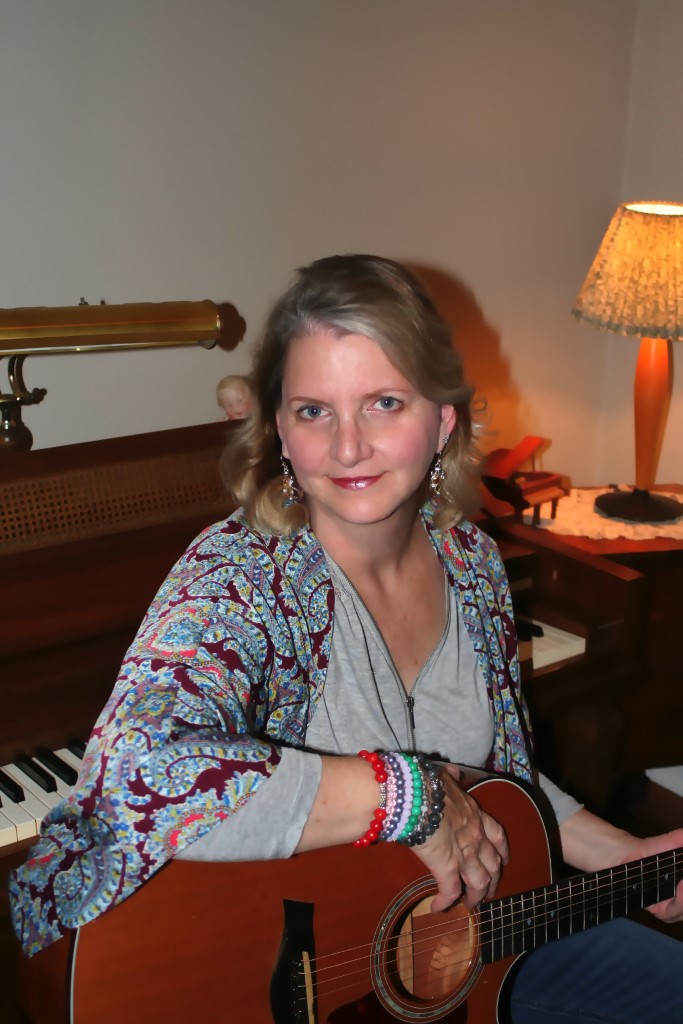
Mary Carnahan

1. What is your personal definition of music therapy?
I would like to refer to the definition that is used by the ATMA. I feel it is important for our profession that a standard definition is used.

2. How long have you been practicing as a music therapist?
Almost 31 years – I began my career as a Registered Music Therapist. My original certificate has the date of June 10, 1981.

3. Where did you receive your training (university/internship/etc.)?
Illinois State University. Internship was at Evansville State Hospital in Evansville, Ind.

4. What inspired you to become a music therapist?
I was interested in both music education and special education, but decided on Music Education. (I also have a teacher’s certificate in music -Eastern Illinois University). I was inspired to become a music therapist after reading several music therapy articles in the MENC Journal that were written by Dr. Paul Rosene. I corresponded with him through letters (prior to e-mail!) and decided to attend ISU to become a music therapist.

5. Where do you currently work?
I work full time for Belleville Area Special Services Cooperative in Belleville, Ill. with special education students in public schools (early childhood through high school: autism, developmental delay, cross-categorical students). Our cooperative has 23 member districts in it. I travel to several schools a day throughout our co-op. Music therapy is considered a related service and is listed on the IEPs. This is my 14th year at BASSC. I also have a part-time private practice mainly with residents (DD) in nursing homes.

6. What is a typical workday like for you?
Each day is a busy but good day. I am fortunate to experience many good responses from students throughout the day. In addition to providing direct services (group and 1:1), I also do evaluations, consultations, quarterly reports, and other documentation.

7. What is your primary instrument? Preferred instrument in therapy sessions?
Since I travel to 2-5 schools in a day, I use the guitar, autoharp, or ukulele, along with various rhythm instruments. The students enjoy this variety. It also helps to support classroom themes. I began using the ukulele soon after I began working at BASSC. One day, a student with autism that I worked with, who rarely spoke, very clearly and slowly stated, “ukulele” in the middle of a session. All the staff just looked at each other in amazement. He then repeated “ukulele”. I told him I had a ukulele and would bring it the next time, which I did. His participation increased after I began using the ukulele at our sessions.

8. What is your favorite part of being a music therapist?
There are so many rewarding experiences and success stories it is hard to choose. Being able to witness these successes is my favorite part of being a music therapist.

I would like to share one of my first experiences when I worked at a nursing home many years ago.

There was a young man, just a year older then me, who was a resident. He had been in a car accident a few years earlier due to being a drunk. driver. This resulted in him becoming a quadriplegic (using an electric wheelchair). I hadn’t expected to see a young man in a nursing home and wasn’t quite sure how to include him. One day, he came past the activity room where I had a resident choir. We were singing “Simple Gifts”. He stopped me later in the day and said that he had played that song when he was in a Drum and Bugle Corps, the Crusaders. He asked if I could teach him some music theory, which I agreed to. Then one day he brought a harmonica down and asked if I could play. Some therapist had wanted him to play to help with breath support when he had been in a rehab. setting after the accident. I told him that I knew how (thanks to the recreational music class).

He learned how to play the harmonica and I accompanied him on the guitar. This young man went from being isolated to playing room to room with me (his idea), became the resident council president, entertained in the dining room with our maintenance man(who is a great guitar player and songwriter)and myself for our parties, to entertaining at other nursing homes with the maintenance man and a volunteer musician. He then decided to attend the local community college, while living at the nursing home. Long story short, he was able to eventually move into his own home with the assistance of support staff and family He also was able to be employed at home.

This process took place over several years, with many other staff, volunteers, and family helping, but it all began with that song, “Simple Gifts”. Not only did music therapy help him, but he was able to give his “gift” of music to others.

Member Spotlight Archives

Louise Diminceli-Mitran (January 2012)
Meredith Harvey (November 2011)

Comments are closed.